


How Long Do Windows Last in South Carolina? What Homeowners Should Know
If you are wondering how long windows last in South Carolina, most residential windows begin showing real signs of age somewhere in the 15- to 30-year range. Some last less, and some last much longer depending on the material, installation quality, maintenance, and exposure to heat, humidity, moisture, and everyday use.
The more useful question is often not just how old your windows are, but whether they are still sealing, insulating, and operating the way your home needs them to.
Why Window Lifespan Can Be Different in South Carolina
South Carolina weather can be tough on windows over time. Hot summers, humidity, moisture exposure, and everyday expansion and contraction can all take a toll on seals, caulking, exterior materials, and aging window systems.
That does not mean windows suddenly fail at a certain age. It means performance can slowly decline. A window may still be sitting in the wall, but that does not always mean it is still sealing, insulating, and operating the way it should.
A Realistic Lifespan for Residential Windows
A practical expectation for many homes is that windows often last around 15 to 30 years, with the exact lifespan depending on the material, maintenance, installation quality, and exposure.
These are general estimates. Actual lifespan depends on weather, installation, maintenance, usage, and material quality.
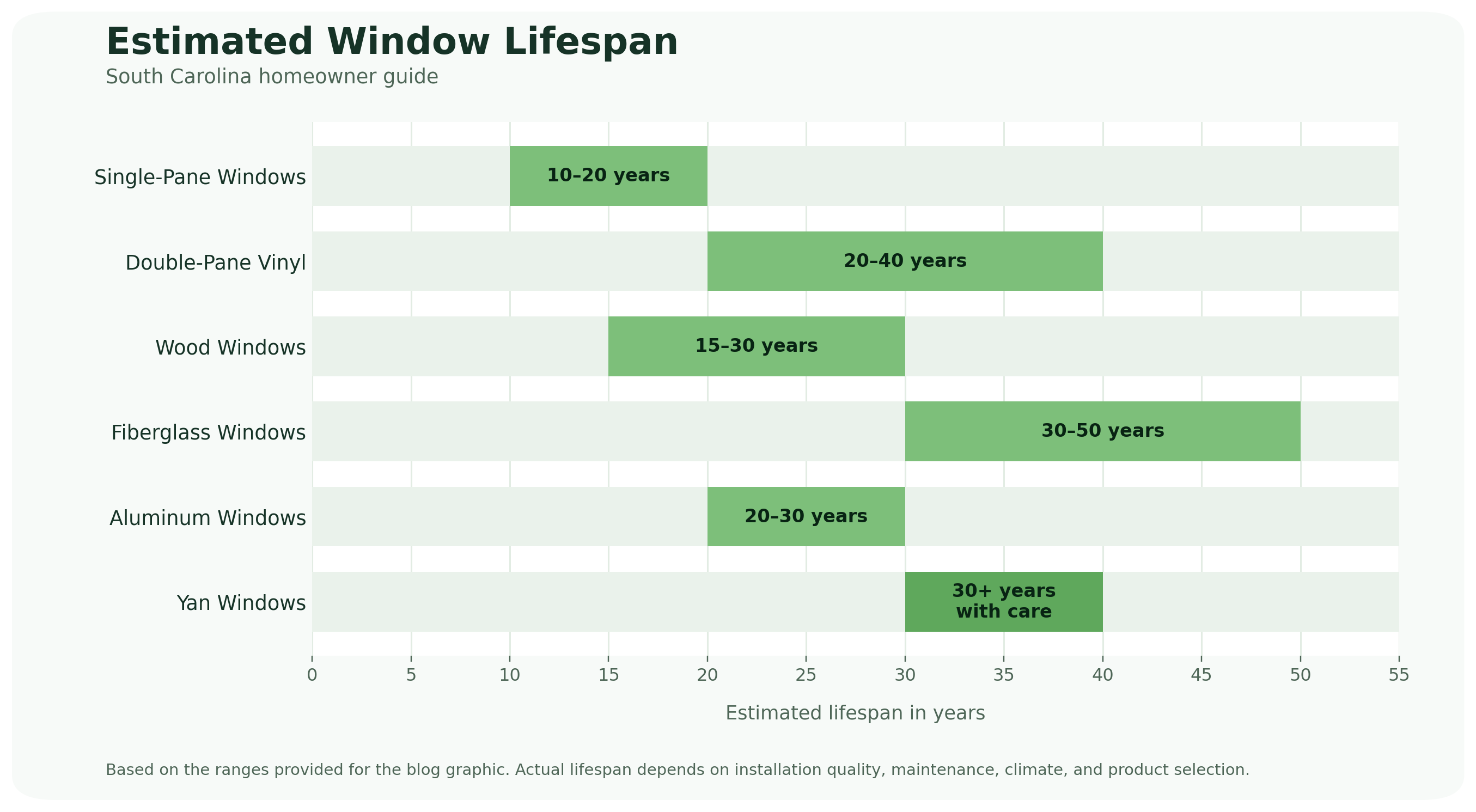
At Yan Windows, we focus on installing window systems designed for long-term performance, but real lifespan still depends on the product selected, the installation method, and how well the system is maintained over time.
Signs Your Windows May Be Nearing the End of Their Life
Drafts
If you feel air movement around the frame, the window system may no longer be sealing the way it should.
Fogging Between Panes
If moisture shows up between the glass, that often points to a failed insulated-glass seal.
Hard Operation
If windows stick, will not stay up, or are hard to lock, wear and age may be catching up to them.
Visible Wear
Cracked caulk, soft trim, rotting wood, fading, warping, or worn hardware are all signs that the window system may be aging out.
In many homes, the first signs show up as performance problems long before the window completely fails.
Energy Efficiency Matters Over Time
Window lifespan is not only about whether the frame is still standing. It is also about whether the window is still doing its job well.
Older or inefficient windows can contribute to higher operating costs over time. A window may still be physically in place, but if it is drafty, outdated, or no longer sealed properly, it may be making the heating and cooling system work harder than it should.
Installation Is Extremely Important
How long a window lasts is not only about the frame or glass. Installation quality has a major impact on window life.
Even a good window can underperform if it is installed incorrectly, if drainage is not handled properly, or if moisture is allowed to collect where it should not.
That is one reason lifespan charts should always be treated as general guidance, not a guarantee. The same type of window can last very differently depending on how well it was installed and how well it manages water over time.
Window Design Details Matter Too
Not all windows are built the same way, and small design choices can make a big difference over time.
For example, some window systems rely heavily on weep holes to help water escape. Drainage systems like that can work, but they also depend on the drainage path staying clear. If those openings become blocked by dirt, pollen, debris, or lack of maintenance, water management can be affected.
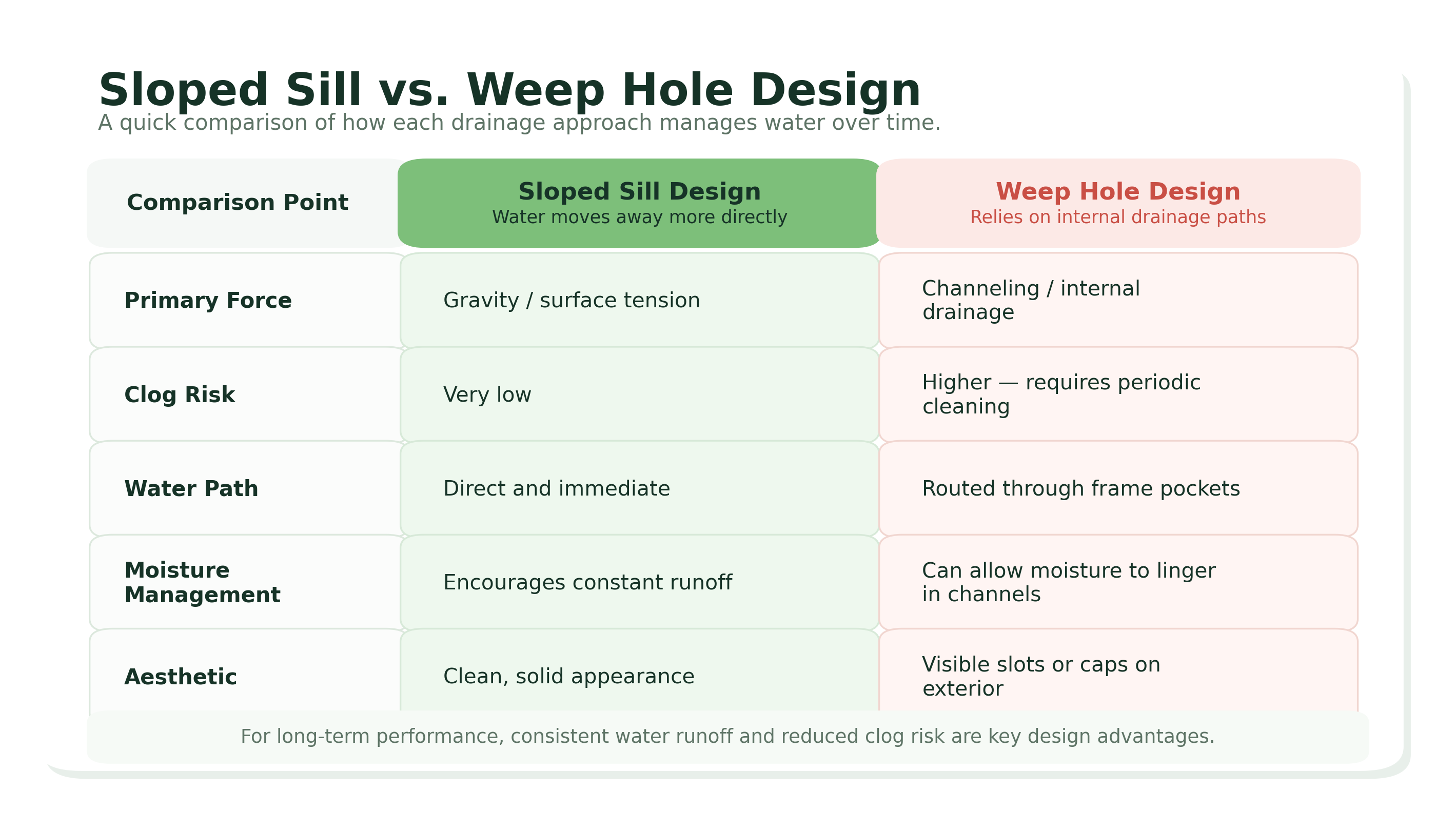
At Yan Windows, we prefer not to rely on weep holes as the main path for water removal. Instead, we prefer systems that use a sloped sill design to help direct water away more naturally. That is part of our installation philosophy and one reason we pay close attention to long-term performance details, not just how the window looks on day one.
The same thinking applies to interior moisture. If moisture collects on flatter sill surfaces and is allowed to sit, it creates a better environment for mold and mildew over time. In our view, interior sill designs that encourage moisture to move away more effectively are a better long-term approach than designs that allow moisture to linger.
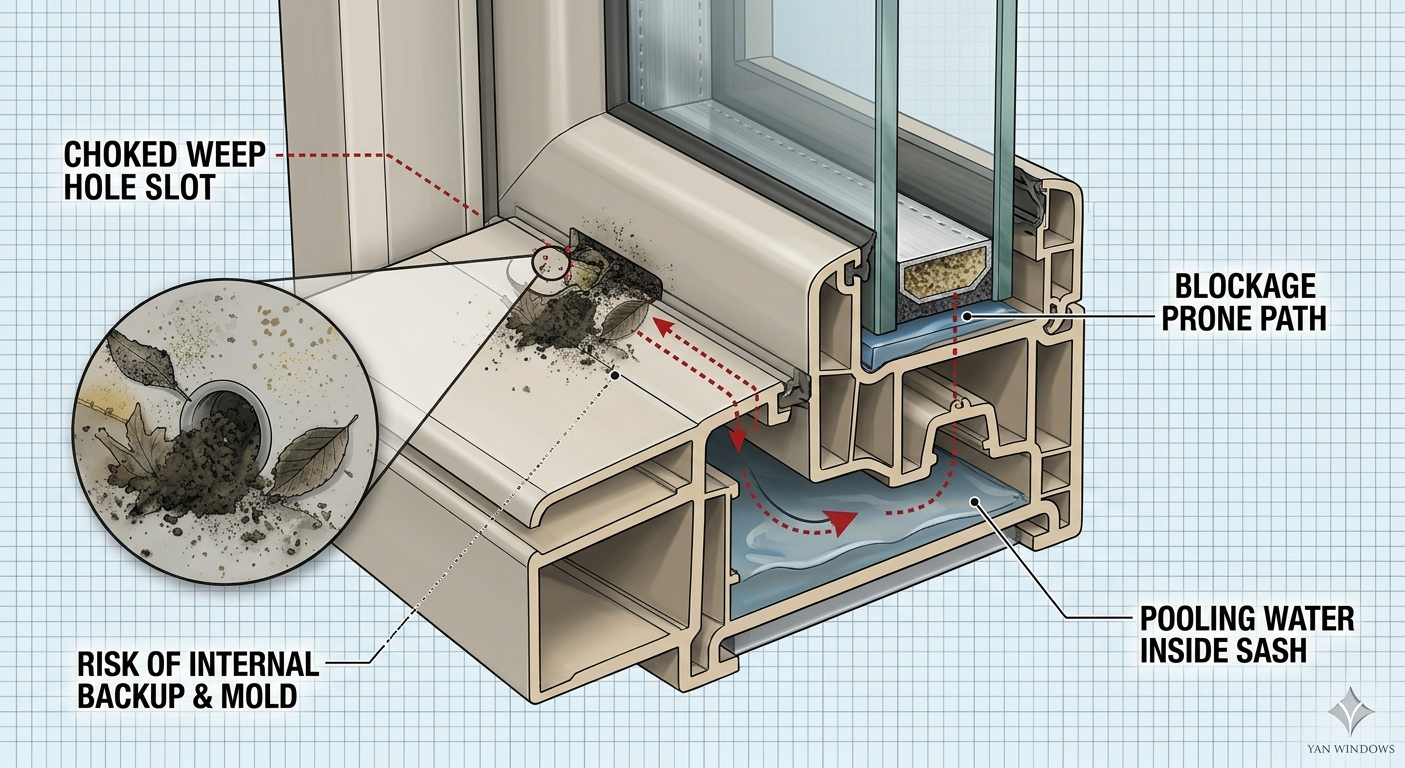
It is a huge difference whether your window has a sloped vinyl design on its sash or if it is flat. A flat design can collect moisture over time and may create conditions where mold and mildew are more likely to develop, whether that happens between the vinyl and the glass or on the flat surface itself.
Need replacement windows or doors in Seneca?
Get a free, no-pressure quote from Yan Windows. Professional installation, honest pricing, and quality products for Seneca and surrounding Oconee County areas.
What Homeowners in Upstate South Carolina Should Keep in Mind
For homeowners in Seneca, Greenville, Anderson, and across the Upstate, the better question is often not just how old the windows are, but whether they are still performing the way they should in this climate.
If the windows are drafty, fogging, hard to operate, or simply outdated, age may matter less than performance. In many homes, the smarter time to replace windows is when they stop doing their job well, not just when they hit a certain number of years.
That is especially true in older homes, where the condition of the opening, trim, and installation details can matter just as much as the glass itself.
So, How Long Do Windows Last in South Carolina?
For many homes, windows often last around 15 to 30 years, with some lasting less and some lasting much longer depending on the material, maintenance, installation quality, and exposure.
In South Carolina, heat, humidity, and moisture can all affect how well windows hold up over time.
That might show up as fogging glass, drafts, sticking sashes, worn trim, or rising energy loss. When that starts happening, replacement is usually worth looking into.
Frequently Asked Questions
How long do windows usually last in South Carolina?
Many residential windows begin showing meaningful age-related issues somewhere in the 15- to 30-year range, though actual lifespan depends on material, installation, maintenance, and exposure.
Does heat and humidity affect window lifespan?
Yes. South Carolina’s heat, humidity, and moisture can be harder on seals, caulking, exterior materials, and aging window systems over time.
What are signs that old windows may need to be replaced?
Common signs include drafts, fogging between panes, hard operation, visible wear, worn trim, rising energy loss, and windows that no longer seal properly.
Does installation quality affect how long windows last?
Absolutely. Even a good product can underperform if it is installed incorrectly or if moisture and drainage are not handled properly.
Should windows be replaced based on age alone?
Not always. In many homes, the smarter time to replace windows is when they stop performing the way they should, not simply when they reach a certain age.
Ready to Upgrade Your Home With New Windows or Doors?
Whether you are replacing outdated windows, improving curb appeal, or upgrading to more energy-efficient products, Yan Windows delivers professional installation, honest pricing, and a no-pressure experience from consultation to completion.
